

World Bio Markets, The Hague
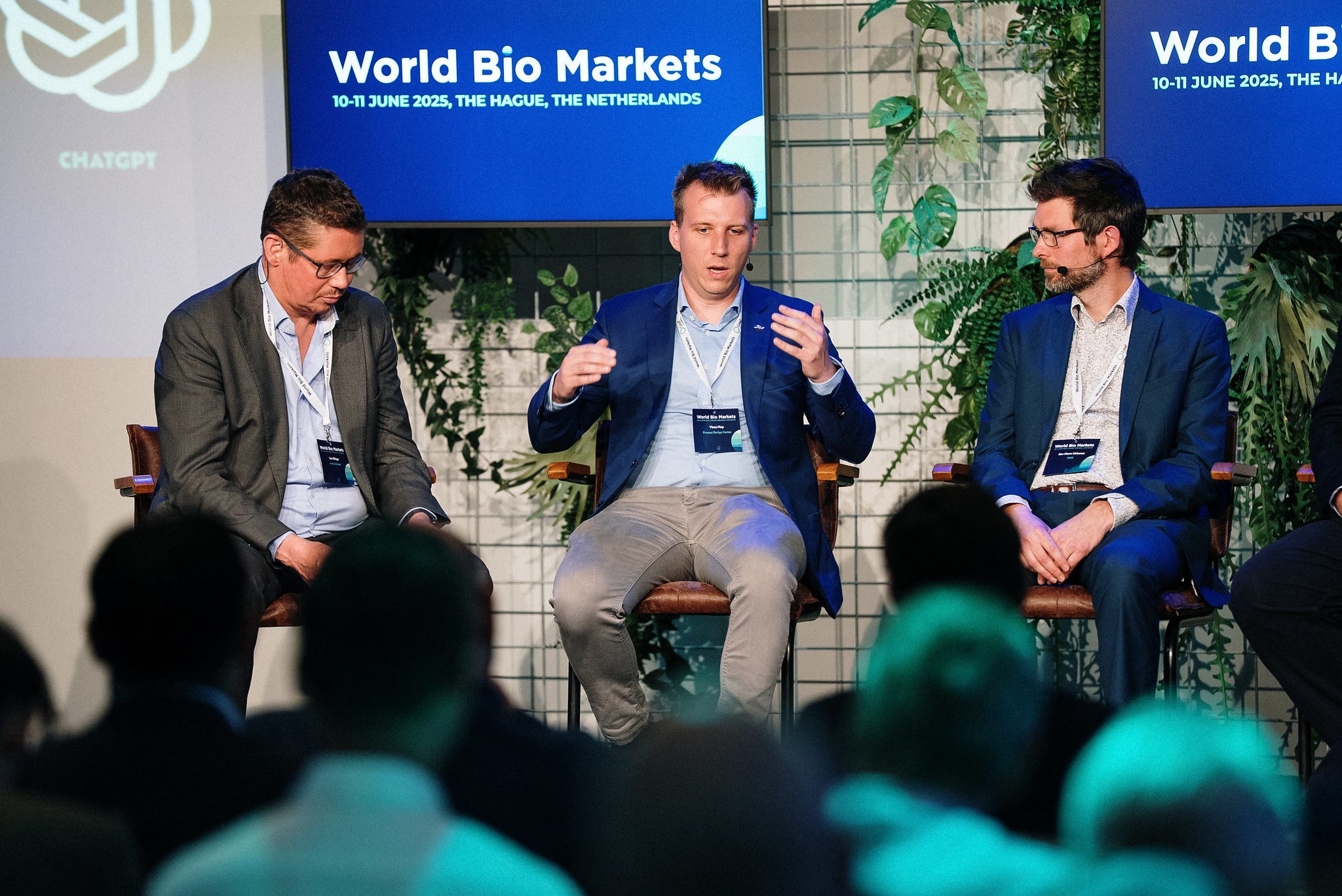
We participated at World Bio Markets with a booth to showcase our process design expertise and our Prosyn.ai software and we took part in a panel discussion on the use of AI software in the process industry, where we shared insights on how digital technologies can optimize operations and drive innovation in bio-based manufacturing.
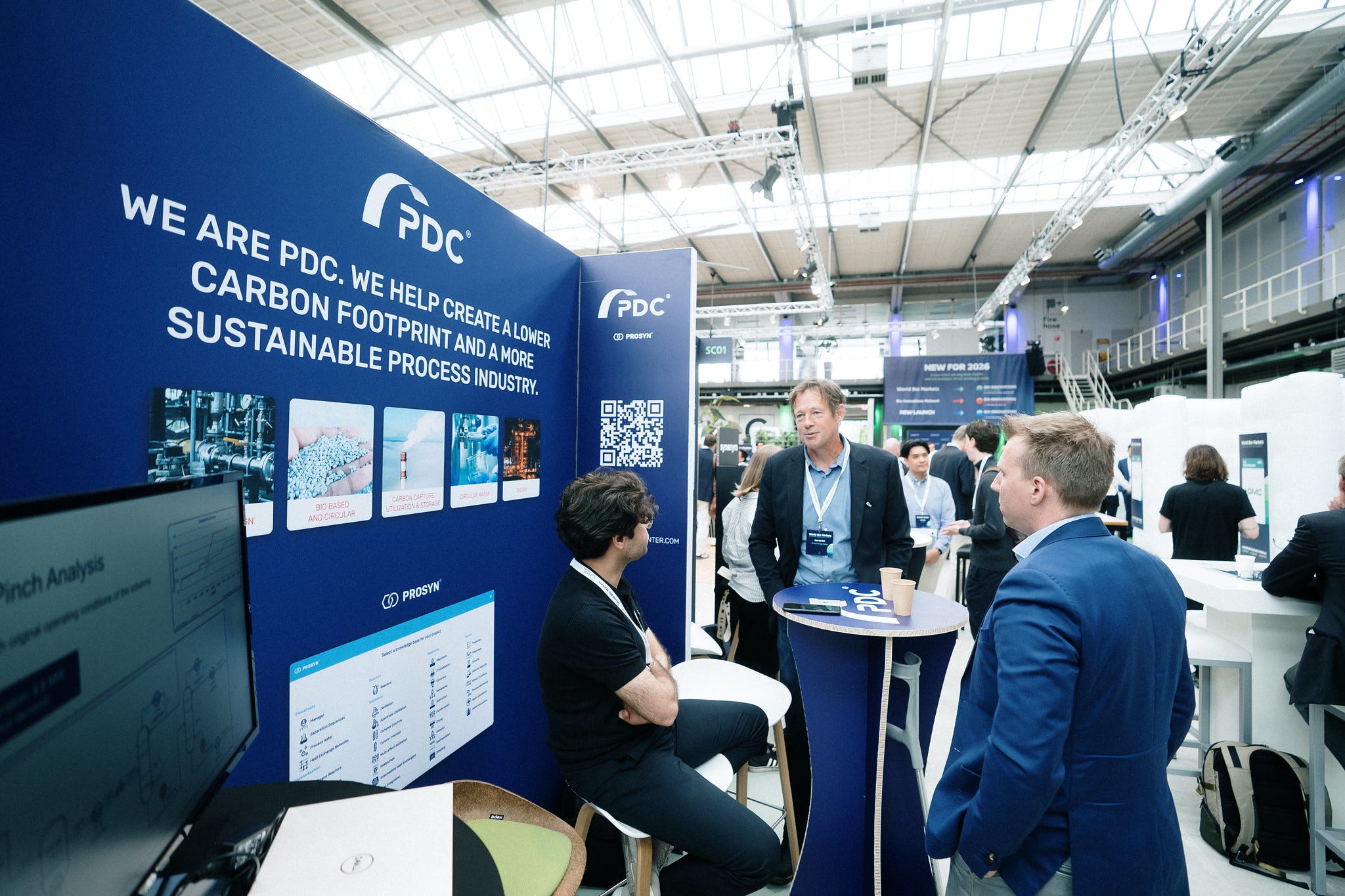
World Bio Markets is a prominent international two day conference (over 400 attendees) dedicated to advancing the bioeconomy through industrial biomanufacturing. It brings together key players from across the value chain, including producers, investors, brands, and technology providers. Held in The Hague, the event focuses on fostering partnerships and accelerating the transition to sustainable, fossil-free solutions. Next up is the same conference (rebranded to Bio Innovations) for North-America where PDC will also be present.
Plantics getting ready for mass market application
Our start-up Plantics won the “Renewable Material of the Year 2021” Innovation Award! Plantics Biomaterials are based on a revolutionary invention by the University of Amsterdam that resulted in the first 100% bio-based thermoset resins in the world for new circular composites, foams, and coatings. PDC has been supporting Plantics since 2017.
Wridzer Bakker shows how Plantics is developing the process that makes a resin from plant-based raw materials (in Dutch only, turn on translated subtitles in Youtube). Besides requiring less fossil raw materials, Plantics' resins are also non-toxic and fully recyclable.
FLEXIZYME consortium marks one year of progress in Athens
The FLEXIZYME consortium recently gathered in Athens to celebrate the first year of collaborative work on advancing sustainable chemical processes. Hosted by project partner NTUA, the two-day meeting brought together researchers, industry experts and pilot partners to review achievements and plan the next phase of development.
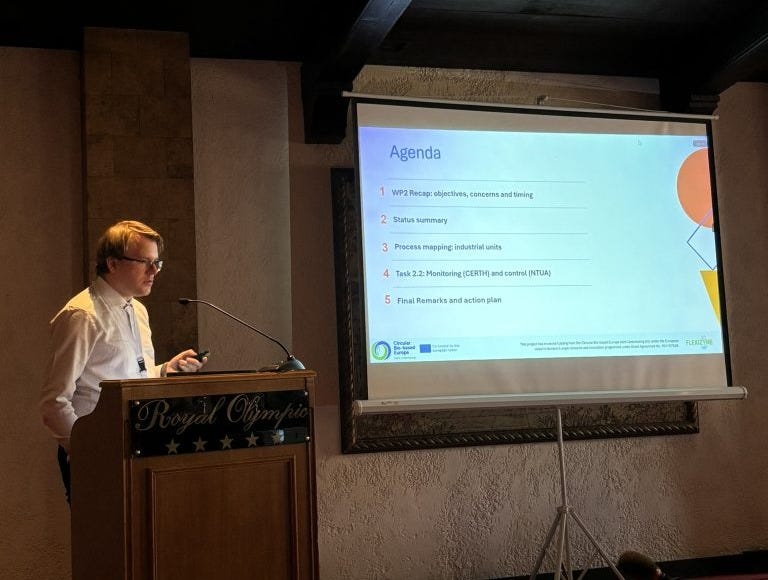
As part of the consortium, Process Design Center (PDC) is leading the development of a holistic process design by integrating experimental insights, selecting technologies and optimizing the system for energy and resource efficiency, laying the foundation for a robust techno-economic assessment.
Key discussions focused on the progress made in enzyme development, process design and scaling up the conversion of food industry residues into valuable fatty amines. Workshops encouraged cross-partner collaboration, while upcoming experimental plans and pilot trials were outlined to ensure a smooth transition from lab-scale innovation to industrial application. The session underscored the consortium’s shared commitment to delivering viable bio-based alternatives and set a strong course for the next year of the project.
e-CODUCT Pilot Launch: Turning Greenhouse Gases into Valuable Chemicals
The EU-funded e-CODUCT project has reached a key milestone with the launch of its ElectroThermal Fluidized Bed (ETFB) reactor pilot in Ljubljana. This system uses renewable electricity to convert CO₂ and H₂S into carbon monoxide (CO) and sulphur—valuable resources for industry.
The process involves two steps: reducing CO₂ and H₂S into carbonyl sulphide (COS), followed by COS decomposition. The project aims to scale the technology to TRL 6, targeting 16 tonnes of CO per year while reducing reactor size by 50%.
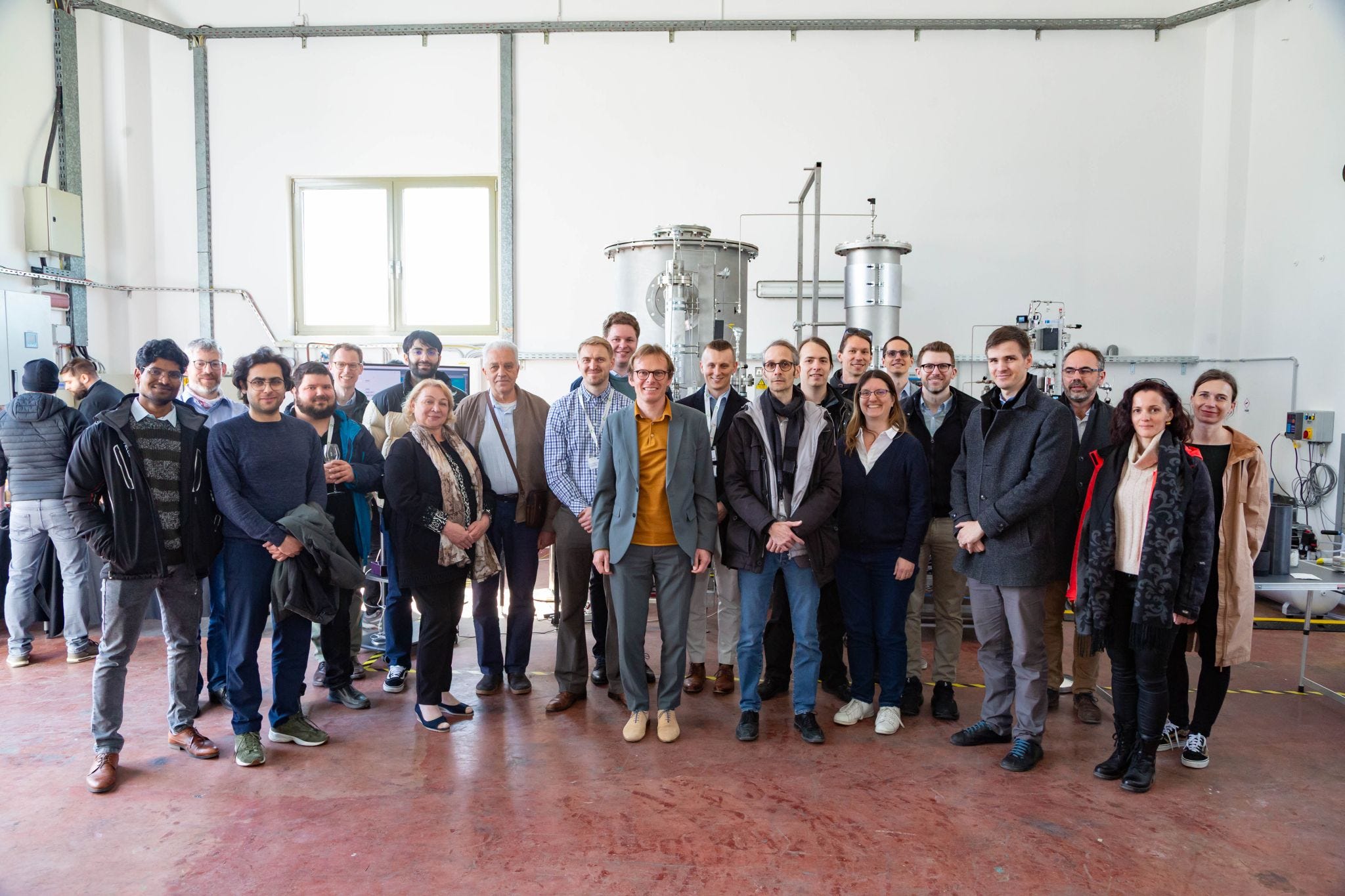
As part of the e-CODUCT consortium, we at PDC are translating lab and pilot results into the conceptual design of a full-scale commercial plant. Our economic evaluations help identify cost-saving opportunities and guide the direction of further development.
We look forward to sharing more insights at upcoming events such as FCCat 2025, and continuing to support innovation in catalysis and sustainable chemical production.
We are PDC. We are an international team of conceptual process design experts with a strong reputation in the industry. Our mission is to help create a lower carbon footprint and a more sustainable process industry.

As a process design innovator with close to 40 years of experience, PDC understands how to support and lead teams through the uncertainties of the conceptual process design flow to reach innovative solutions. The methods we share have, over the years, helped us quickly and effectively design solutions to a wide range of challenges.